Your first tattoo: a step-by-step plan
Most first-tattoo problems come from doing things in the wrong order, like paying a deposit before you've seen healed work or picking a spot before thinking about a summer of no swimming. This page puts the decisions in a sensible order and links to the detailed guide for each step.
The order that avoids most regrets
- Write down the idea in one sentence, and say why it matters. "A small fine-line swallow for my grandmother" is enough. If you can't say why you want it, give it a few months. A tattoo you still want after a season is far less likely to become one you regret. How to turn an idea into a design.
- Pick a style family, not an image. Bold traditional, fine line, black & grey realism and others age differently and are done by different specialists. Styles compared.
- Choose placement with your real life in mind. Think about visibility at work, how much the area rubs against clothing, and whether you can keep it out of the sun and out of water for the weeks it takes to heal. Placement trade-offs.
- Shortlist two or three artists who already do that style well, and look at their healed photos. How to vet an artist.
- Book a consultation. Agree the size, the price structure, the deposit terms and the aftercare routine before you pay anything. Quotes and deposits.
- Check the studio's hygiene on the day. What you should be able to see.
- Follow one aftercare routine, the one your artist gave you, and know which signs mean you should call a doctor. Aftercare · Healing: normal vs not.
Before you pay a deposit
A deposit usually secures a slot and is often taken off the final price, but the terms vary from artist to artist. Ask three questions: is it deducted from the final price, when do you lose it (for example if you reschedule late), and does it cover design time? Get the answers in a message, not just verbally.
Health questions to settle first
Mayo Clinic suggests making sure you are vaccinated against hepatitis B before getting a tattoo; whether any other vaccination (tetanus, for example) needs updating is a question for your own doctor. If you have a skin condition, a known allergy (red pigments are more often linked to allergic reactions), a condition that affects healing, or you take medicine that affects bleeding, speak to your doctor before you book. Don't stop or change a prescribed medicine on your own. Tell your artist about all of this on the consent form.
The U.S. FDA notes that no pigment is approved for injection into skin and that inks can be contaminated even in unopened containers. That isn't a reason to panic, but it is a good reason to use a reputable studio and report any reaction.
Age In England, Wales and Scotland it is an offence to tattoo anyone under 18 (Tattooing of Minors Act 1969). In the US, age rules are set by each state. Expect to show ID.
The day itself
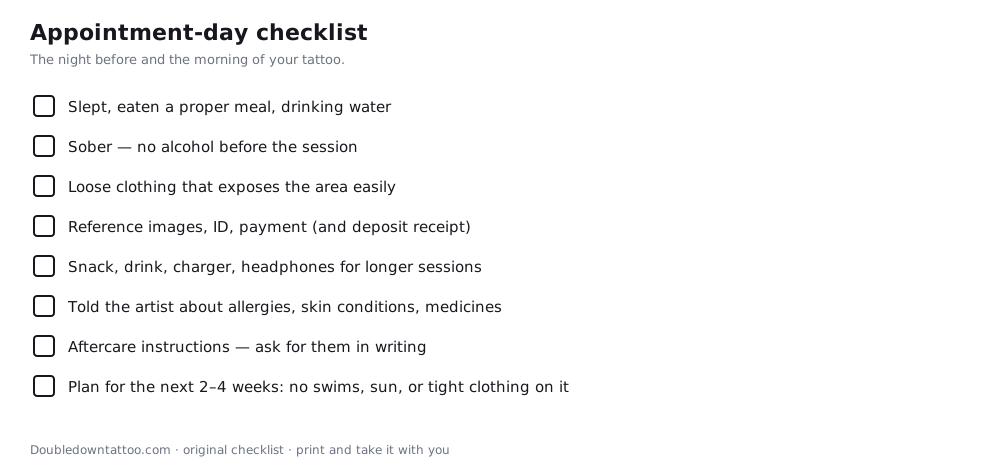
Arrive rested, fed and sober. Many studios turn away anyone who has been drinking. Wear clothing that exposes the area without needing to be removed altogether. Bring something to do on long sessions and ask for breaks when you need them. Most artists would rather pause than tattoo a client who is about to faint. More on handling pain.
What the first month looks like
For the first few days the area is an open wound. After that it typically flakes and itches for a couple of weeks, and the surface usually looks closed somewhere between two and four weeks. The deeper skin keeps settling for months. During that time no swimming, baths or hot tubs and no sun on the healing skin means the timing of your appointment matters: a tattoo booked the week before a beach holiday is a bad plan. The full timeline is on our healing page.
Five first-timer mistakes that are easy to avoid
- Choosing the artist by price or proximity rather than by healed work in your style.
- Making very fine detail very small. Lines soften over the years, so tiny detail can blur. Ask the artist what minimum size they recommend.
- Booking right before a holiday, a swimming season or a job that needs tight clothing on that area.
- Mixing advice from five sources. Pick your artist's routine and stick to it.
- Ignoring warning signs because "some redness is normal." Know the difference: warning signs.
Sources
Read in full on 11 October 2026. The jurisdiction tag shows where each source applies.
- Mayo Clinic Staff. Tattoos: Understand risks and precautions. Mayo Clinic, 2024-03-02. US
- U.S. Food and Drug Administration. Think Before You Ink: Tattoo Safety. FDA Consumer Update, 2025-02-07. US
- Cleveland Clinic Health Essentials, with dermatologist Shilpi Khetarpal, MD. Tattoo Aftercare Tips From a Dermatologist. Cleveland Clinic, 2026-03-20. US
- UK Parliament. Tattooing of Minors Act 1969 (c. 24). legislation.gov.uk, 1969, as revised. England, Wales & Scotland